
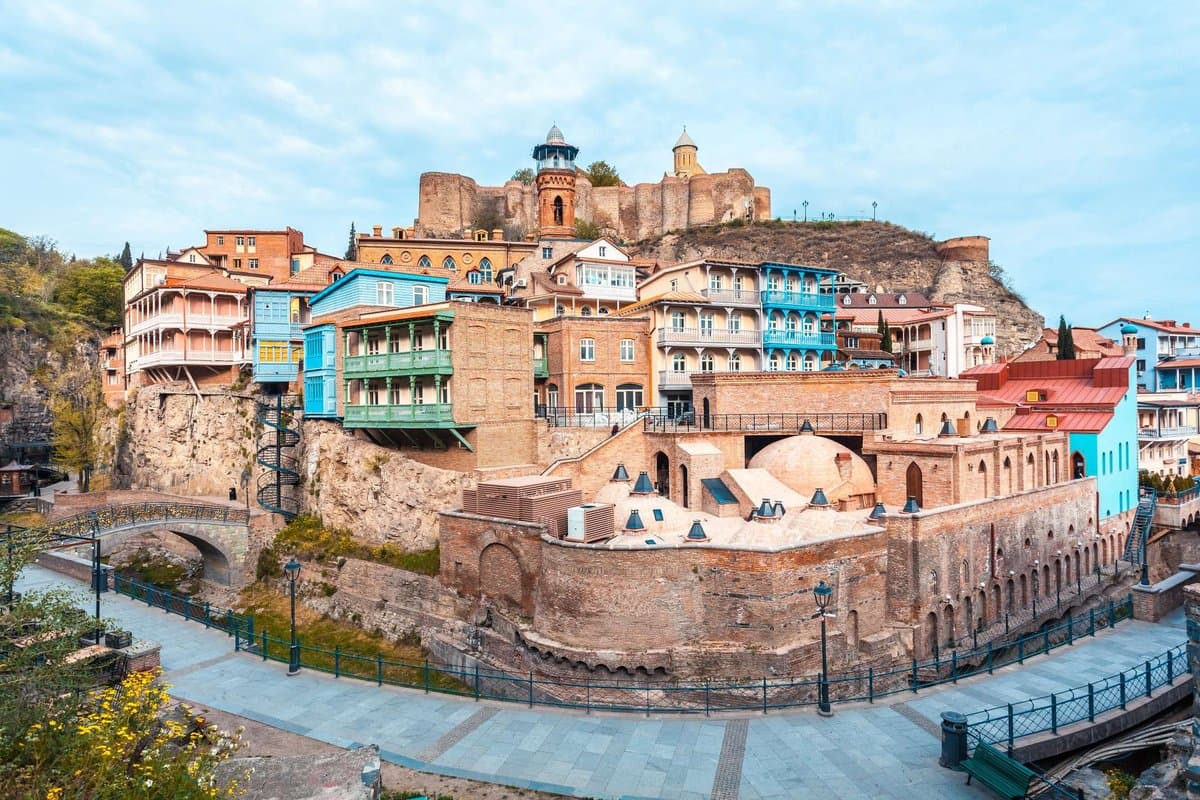
Abanotubani
Tbilisi
Located in the heart of Old Tbilisi, Abanotubani is one of the city's oldest and most distinctive historic districts a place where the story of the Georgian capital begins.
According to legend, in the 5th century, King Vakhtang Gorgasali discovered natural hot sulphur springs while hunting in the area. Impressed by the warm waters, he decided to establish a city around them. These springs are believed to have given Tbilisi its name, derived from the Georgian word "tbili", meaning "warm".
Archaeological evidence shows that the sulphur springs were used as early as ancient times, while most of the bathhouses that remain today date back to the 17th-19th centuries. Built with distinctive brick domes and partially set below ground level, these structures reflect the influence of Persian bathhouse architecture and have become one of the most recognisable symbols of Tbilisi.
For centuries, Abanotubani was much more than a place for bathing and relaxation. It served as an important social gathering point where merchants, travellers, writers, and local residents met. The famous French writer Alexandre Dumas visited Tbilisi in the 19th century and described the city's sulphur baths with great admiration in his travel writings.
Today, Abanotubani represents a unique combination of history, architecture, and living tradition. Visitors can explore the historic bathhouses, experience the natural mineral waters, and continue their journey through the nearby landmarks from Narikala Fortress and Leghvtakhevi Waterfall to the narrow streets of Old Tbilisi.
Join our tour and discover the place where the history of Georgia's capital began a district where ancient traditions, remarkable architecture, and the spirit of Tbilisi come together.
Back to Tbilisi